Showing posts with label companion crops. Show all posts

Friday, April 1, 2011

Permacrop 2 - Asparagus and Parsley

Asparagus, quite an expensive food in shops is easily available from your garden once it is established. Asparagus is a native to coastal regions, so with a bit of care it should do well here.
It's a perennial crop, so will keep producing year after year.
I decided to grow from crowns as opposed to seeds in order to be more sure of establishing the crop.
Bed preparation was straight forward, but I put a fair bit of work into it.

As with the Jerusalem Artichoke I dug down to base rock in the bed.
I pulled the stones from the dig and dumped them at the bottom of the trench to create drainage and a base.
After that I heaped in about two whellbarrows of seaweed and another of well rotted manure - this is a permanent bed, so I went to town on it.
As asparagus is a coastal plant, I feel the seaweed will give it the best nutrition and environment as well as deter slugs underground.
Over that I used chicken wire nailed to the sides of the bed to create a sieve (I think it is referred to as a soil riddle normally) for the soil, breaking it up and removing stones, weeds and lumps of last years turned in grass that had not broken down.
Removing this materiel also let me find cutworms, leather jackets and other nasties that were quickly dispatched to the big weed patch in the sky.

The asparagus patch was separated from the rest of the bed by an old limestone kerb.

The plot itself is lower than the rest of the bed, this is important as the asparagus patch needs to be built up year after year to continue cropping.
It also creates a barrier, obviously the idea is the asparagus spreads its roots around in the plot, expanding and growing within its own soft earth 'box'.

Also, having the different, stepped level I have the option of covering the space with a sheet of transparent corrugated plastic, this will improve the temperature in the plot.

I am growing two types, both purchased from Mr Middletons in Dublin, the idea being variety and different cropping times to extend the production period.

This blog is independent, no sponsors so no vested opinions. In all fairness having previously recommended Mr Middletons postal service I'm afraid I can no longer do so, but more about that later.

One was Connovors Colossal, holder of the RHS award of merit for an outstanding variety and Mr Middleton Gold Medal Winners Bloom 2009/2010. 6 crowns cost €8.99 EUR

The other was Pacific Purple. Advertised as more tender and sweet than many green varieties.
The spears are basically stringless and can be eaten raw, with dips, or sliced in salads.
Colour is lost if cooked so is best steamed. Produces supersweet white spears if earthed up.
4 crowns cost €8.99 EUR

This year I am trying to do as much companion or complimentary planting as possible, every bit helps in the fight against pests and plagues.

Parsley  is a companion to asparagus and tomato because it deters asparagus beetles as well as carrot flies and rose beetles. It is also said to improve growth.
The Parsley plants were last years plants starting to grow again, so I simply transplanted them into the asparagus plot up against the limestone to give it a bit more heat, this I hope will help it establish and flourish .
I may also plant a few Atika - root parsley seeds there when the weather gets a little better.
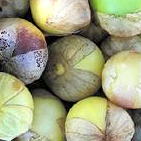
Because of the parsley as a companion crop and the transparent plastic cover option I think I will also try growing tomatillo in the plot. The seeds are en-route from realseeds.co.uk.

A relative of the tomato these small vegetables in a papery husk are related to the tomato, are very productive and easy to grow, used to make salsas, chutneys and in pasta sauces etc, as well as traditional ingredients for Mexican and South American dishes. Tomatillos, referred to as green tomato (tomate verde) are a staple in Mexican cuisine.
The bed itself is in quite a warm, sheltered spot so as a catch crop I also threw in a few strawberry plants picked up as a compulsive buy at Aldi in Clifden.

Mr Middleton problems.
Having recommended Mr Middletons postal service in the past I'm afraid I can no longer do so.
This year, the delays by Mr.Middletons were a problem, as was the very poor communication. I was very dissappointed by the very, very poor customer service.

I cancelled my postal order and the crowns were purchased by a mate in Dublin for me at Mr Middleton's direct.

The attempt to buy them online dragged out, a lot of hassle with no apologies and little explaination.
On the 11th of January I ordered Jerusalem Artichoke and Asparagus crowns from them, as advertised in the Irish times. It was the first time I had spare cash in some time so it was a real treat.

After ordering, and getting confirmation, I got an email saying that there might be a small delay in deliveries.
Over a week later I emailed asking for an update, again, the reply was that they were awaiting delivery with the Artichoke and I should have them within a week - that was about the 19th of Jan.
Roll on Feb 15th - and a phone call asking for card details. I had assumed that payment had been taken in January - but no, and in the meantime I had changed my card.

So I'm a little fed up being messed about, particularly after having been a loyal customer.
If I could have sourced the asparagus crowns elsewhere I would have, as I did with the Jerusalem Artichoke.
The least they could have done was send on the crowns, and send on the tubers at a later date rather than leave me incommunicado for nearly a month.
Anyway, as the old saying goes - buyer beware, and I am sure there are crowns in local garden centres.


Free Stats Hit Counter Web 
Analytics

Wednesday, March 30, 2011

Companion Planting and pest control

This list summarises some commonly held beliefs about the uses of companion plants, and basic anti-pest precautions I have coveed here before.

Firstly, slugs. Beer traps, copper bands and a good defense in building of slug hostile paths are primary.

Encourage Toads, Frogs and Hedgehogs by providing safe havens, dried cat food t attract them (this will also attract slugs so spread it away from veg beds) and shelter.
Their menu include cutworms, crickets, grubs, chafers, caterpillars, ants, moths, flies, slugs.
They are your friends, welcome and love them,be gretful if you have them.

Slugs are most active at night and are most efficient in damp conditions.
Go slug lamping at night, its fun. At dusk, go out in the garden with  torch and a knife and kill them on sight, every slug you kill stops hundreds more being born

Far and away the best course of action against slugs in your garden is a simple adjustment in the watering schedule. Avoid watering your garden in the evening if you have a slug problem. Water in the morning - the surface soil will be dry by evening.
Studies show this can reduce slug damage by 80%.

Secondly, the more insidious underground pests, cutworms, leather jackets et al, especially when opening up new grass land for veggies - use supernemo - a great Irish product that I found to be outstandingly effective.

In my own - non scientific - tests, supernemo outperformed nemasys, another pest control pack, and also I could clearly see that beds treated with suprnemo had little or no crop damage,whereas the few extra beds I threw in the garden that were not treated with supernemo but nemasys suffered very badly - in particular root crops.


SuperNemos are an Irish made bio-control product that contains a wider range beneficial nematode species.

SuperNemos is environmentally friendly, harmless to wildlife, earthworms,bees, bumblebees, pets and kids.

It attacks only target insect pests. There is no need for masks or specialized safety equipment.
This product will control Vine Weevil, Wire worms, Strawberry Root Weevils,Carrot Fly, Weevils, Chafer Grubs, Caterpillars, Cutworms, Leatherjackets, Beetle larvae, Cabbage caterpillar's, Flea beetle, Cabbage root fly, Fungus Gnats Larvae and many more!

SuperNemos will attack its target insect species; the nematodes enter the host through body openings or by penetration of the body wall. Once inside they kill the host within 48 hours.

Now the plants and their companions:

Allium--flowering onions, chives, garlic, leek, onion and shallot
Companion to: Roses, carrots, tomato, fruit trees and other vegetables
Repel aphids, weevils, carrot flies, moles, fruit tree borers; controls rust flies; protects tomatoes against red spiders. Protects roses from black spot, mildew and aphids.
BUT is believed to inhibit growth of peas and beans.

Basil
Companion to: Tomato, asparagus
Repels aphids, flies and mites; helps control insect pests such as tomato horn worms, asparagus beetles, and disease.

Beans (Butter, green, snap, string,wax)
Companion to: Beets, carrots,cucumber, corn, aubergine, potato,strawberry
Encourage growth of companion plants. Adds nitrogen to the soil.

Borage
Companion to: Tomato, strawberry, fruit orchards
Repels tomato worms. Adds potassium, calcium and other minerals to soil. Attracts honeybees.

Chamomile
Companion to: Cabbage, onions
Improves growth and flavor--but plant only one plant every 150 feet or so.

Catnip
Companion to: Aubergine. Fresh catnip steeped in water and sprinkled on plants will drive away flea beetles.

Celery
Companion to: Cabbage, leeks, tomato, cauliflower
Improves growth of companion plants. Repels white cabbage butterflies.

Chervil
Companion to: Radish. Improves growth and flavor.

Chive
Companion to: Carrots. Improves growth and flavor.

Coriander
Companion to: Vegetables. Repels aphids. Attracts bees.

Cucumber
Companion to: Sweetcorn, beans, peas, radish, sunflowers
Improves growth. Vines growing with corn help anchor sweetcorn.

Dill
Companion to: Cabbage. Improves growth. Blossoms attract honeybees.

Fennel
Most plants dislike fennel--so plant it away from the vegetable garden.
Its foliage and flowers may attract beneficial insects.

Geranium
Companion to: Cabbage, corn, roses. Repels cabbage worms.

Horseradish
Companion to: Potato. Encourages growth.

Hyssop
Companion to: Cabbage. Improves growth, deters cabbage moth.

Leek
Companion to: Carrots, celery, onions. Improves growth, repels carrot flies.

Marigold
Companion to: Tomato, potato, strawberry, beans, roses
Encourages growth, deters some pests.
Discourages harmful nematodes if they are grown for several seasons in the ground in areas that have nematode infestations.

Mint
Companion to: Tomato, cabbage. Improves flavor and growth

Mustard
Companion to:Cabbage, cauliflower, radish, Brussels sprouts, turnips, collards, kohlrabi
Plant mustard as a trap crop. It attracts numerous insect pests. Remove and destroy it before your main crops can be harmed.

Nasturtiums
Companion to: Cucumber, other vegetables, fruit trees.
Repels aphids,cucumber beetles and white flies.
Acts as trap crop for aphids. Repels borers near fruit trees.

Onion
Companion to: Cabbage, cauliflower, broccoli,beets, tomato, lettuce, strawberry, chamomile, summer savory
Repels aphids, weevils, carrot flies, moles, fruit tree borers; controls rust flies and some nematodes;
Protects tomatoes against red spiders. BUT is believed to inhibit growth of peas and beans.

Oregano
Companion to: Broccoli, brassica's .Repels cabbage butterfly.

Parsley
Companion to: Asparagus tomato, roses.
Deters asparagus beetles.Improves growth. Deters rose beetles.
Nigel from chillington hoes also informed me that parsley is related to carrots and parsnips and will not deter carrot fly and will actually be attacked by them.

Peas
Companion to: Sweetcorn
Adds nitrogen to soil for use by hungry corn plants. Grows well with carrots, turnip, radish, cucumber, beans and potatoes.

Pennyroyal Broccoli,
Companion to: Brussels sprouts, cabbage, other plants. Discourages ants, plant lice, cabbage maggots.

Radish
Companion to: Cucumber. Deters cucumber beetles.

Rosemary
Companion to: Carrots, cabbage, beans  Repels carrot flies, bean beetles, cabbage moths.

Sage
Companion to: Carrots, Brassica's. Repels carrot flies, cabbage moths.

Summer savory
Companion to: Green beans. Improves growth, deters bean beetles.

Tansy
Companion to: Cucumber, squash, roses, raspberry, blackberry.
Deters flying insects, striped cucumber beetles, ants, flies, squash.
BUT, attracts cabbage worms.

Thyme
Companion to: Cabbage
Controls flea beetles, cabbage maggots, cabbage worms and white cabbage butterflies.

Wormwood
Companion to: Various plants  Deters black flea beetles, cabbage worm butterflies. Highly Poisonous


Free Stats Hit Counter Web 
Analytics