There's more to a kitchen garden than just summer salads.
You can have good, fresh food through the year and reduce the food miles.
I have started cleaning up the beds, and trying to keep the cats out.
Leeks have been transplanted, as these can stay in the ground through the winter.
I'm also growing modules for winter and spring cabbage, Kale's and cauliflower.
Transplanting the leeks also allows me to earth them up further.
They are slow growing, but well worth the wait.
My Paris Silverskin pickling onions have not grown all that well - too crowded or overshaded perhaps, so I transferred them to a new bed with the leeks.
Its also time to start crop rotation, so putting in the leeks starts next years onion patch.
As well as that there is just general cleaning and tidy-up. The squash that I grew went out of control, so a couple of planks and nails with a length of old telephone wire has been set up to provide a trellis of sorts, rough and ready but it gets things back in order.
Over the weekend I will clean up the pathways and I have a few more bits and pieces to pickle or preserve.
Some of the broccoli have bolted, so its time to keep an eye on the others, if they look like their going to bolt, then it is a case of blanch and freeze I think.
I will need to trellis up a few other bits and pieces, but over all there's not that much to do other than prep work for the winter vegetables.
Last week in Lidl there were special offers on goats cheese and Spanish vinegar. There were two types of goat cheese on offer. One was a Portuguese Queijo de Cabra, the other was a French Chevre. This is a great salad, based on a typical French Pyrenees dish, but with a bit of a Spanish twist.
Its very quick and cheap, and tastes absolutely lovely, the main theme is the salty bacon offset by the clean, cool taste of the cheese, the sharpness of the mustard dressing and the warm crunchy croûton's.
I would not use Cheddars, Gouda or Edam types.
Any decent mild cheese will do the trick, if you have the cash, Roquefort is the classic, but I find it a little too strong for my taste in this dish.
What I really like is that you can have a full meal or light snack in about 5 minutes
I used the Queijo de Cabra in this meal.
For the bacon I just used offcuts from rashers that I used in another meal, so it was using up leftovers.
Streaky bacon is the perfect type, essentially it is the rendered bacon fat that you get into the bread.
The lettuce is homegrown.
To give this meal a more Irish flavour, use croûton's made from rebaked, dried and decrusted Soda bread or even Potato Soda bread that I will post here at a later date.
Ingredients:
2 Rashers of bacon, diced up
2 slices of toasted sourdough, diced.
50g Diced Queijo de Cabra.
50g Chopped walnuts
1 Tsp Wholegrain mustard.
Half a head Raddichio type bitter lettuce, Spinach is an alternative.
Half a head of your favorite lettuce, I used Butterhead.
Dressing
140 ml good olive oil (I added a little wallnut oil)
30 ml White wine vinegar
30 ml Spanish sherry vinegar
Two tsp Colman's English mustard
clove of Garlic
Pinch of ground Pepper
Pinch of salt (I like to use Maldon salt for salads)
Method.
Put a little oil in a heavy based pot.
Fry the chopped bacon in the base of the pot, rendering out the fat.
Add the croûton's and the wholegrain mustard, the croûton's soak up the bacon fat.
Meanwhile chop the lettuce rougly, wash and dry.
Put into a bowl with the cheese. and mix
Add the croûton's, bacon and chopped wallnut's
Pour over dressing, mix well and serve.
An ideal side salad or by increasing the lettuce content it makes a great meal in itself served with a chilled Rosé or a white, maybe a Chardonnay.
Like my Blackberry Chutney, this is another way to use blackberries.
The final result is a stunning lemon and blackberry flavour with a creamy, buttery texture
It tastes really nice, perhaps a little too sweet, so in future I'll just reduce the sugar content a bit, and maybe use a little carrageen, I just need a little more tartness.
I think it would make a really nice filling for a tart.
The only pain is the straining, but it is really worth the trouble.
Before you start I would recommend reading Val Harrisons advice on curd making
Its just a nice thing to have a bit of variation on the staple blackberry jam, which cant be beaten - but this comes close.
It is advised that you use unsalted butter, but I used a really good butter from a small Mayo based family company who make a really nice butter, far better than anything else I found in the supermarkets over the years. Cuineog have deservedly won several awards for their traditional, great tasting product. It's great to see a small family business doing so well.
Once you have tried Cuinneog, I can tell you it's hard to back to the mass produced kerrygold types.
The flavour is rich, and if your going to the trouble of making this curd, just for the flavour, I'd recommend it fully.
The good news is that Cuinneog's distribution and availability is increasing all the time.
Ingredients:
1.0kg blackberries
350g peeled and cored apples*
150 ml water
110 g butter
Yolks of 2 fresh eggs
900g sugar
100 ml fresh lemon juice
I added 20g Ginger and two tsp lemon rind to give a little more zing to the original recipe that came from the wonderful John and Val Harrison at allotment.org.uk
Vals method is a little different to mine, but they both work.
(*I added 100gm of rhubarb in lieu of apple)
Method:
1.Put blackberries, apples and sugar in a large saucepan with the water. Bring to the boil over a high heat. Reduce the heat, cover and simmer for about 30 minutes until the fruit is is soft and near setpoint.
2.Remove from the heat and push the fruit through a strainer into a medium-sized mixing bowl, pressing down on the fruit with a wooden spoon.
3.Put another heatproof bowl over a pan of simmering water or bain maire and melt the butter.
Beat the eggs lightly and stir into the bowl with the lemon juice and pressed blackberry and apple.
4. Cook for 25 to 30 minutes or until mixture thickens, stir frequently.
5. Remove the bowl from the heat and pour the curd into clean, dry, warm, sterilized jars.
IMPORTANT TIP: Filling curd jars is different from jam, you leave as little headspace as possible because Curds shrink.
8. Don't forget to cool them sitting on a cloth, this gives more even cooling.
Keep the jars in a cool, dry place. Curds will last about 3 months if kept in a refrigerator, 6 weeks in a cool, dark place but only about a week once they are opened.
I hope the waterbath may push out the shelf life to about 5 months
OK - its been a while since I did a meal plan, having been stuck doing jams and pickles.
Becuase the fish was caught locally, and nearly all the veg came from the garden, this cost very little to make.
Serves 4 people.
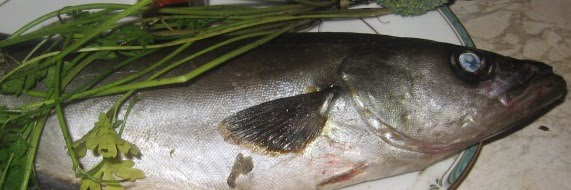
Pollock is a great fish. Its very versitile, abundant and cheap at fish shops, or in my case, free off the rocks.
Whiting, Pouting and Coley can also be used for this recipe.
When we get a recipe we stick to it as if it were some sacred text rather than experiment or adjust for the seasons.
You can eat what you want all year round - and that is sometimes a great thing, but we need to draw the line somewhere.
When I go to the supermarket in Ireland there is Garlic from China! In Holland there were Onions from New Zealand !!!!!
What has happened to Irish and EU prduction for such basic staples. One of the primary reasons I set up the kitchen garden was to reduce food miles, not because I am super Green, but just as a damn point of principle, I think it is insane to buy something as simple as garlic from China.
Good examples of sustainale fish are Pollock, Whiting, Pouting and Coley that can also be used in place of Cod in most recipes, and a lot of restraunts label these fish, haddock and ling as cod.
At this time, we are wiping out stocks of cod.
Our ability with electronics, engine size, winch strength and net size means we have far outstripped natures ability to replace what we take.
When I look at what is happening in fishing, I do worry - I like fish as food, and like having them around.
And the plastic pollution from fisheries is utterly out of control. The first Nylon net that went into the oceans in the 40's is still there, it breaks up but des not degrade so we are turning the seas into a toxic plastic soup.
Nearly 75% of the world's fisheries are either overfished or fully fished.
As I have said before, I am not a religious person, but there are passages in several religious texts.
A lot of free market, christian right wing capitalist groups are also self declared 'people of faith'.
I think they would do well to remember that according to Genisis that we have dominion over the seas and the fish, but having dominion is not a licence to destroy all and sundry.
With what some claim as a god given right, as with all rights, comes responsibility.
One of those responsibilities must surely be to harvest the oceans in a sustainable way.
Governments can do it, especially here in the EU by limiting engine size, net size, incorporating square mesh panels in the cod end of nets, having strictly enforced zones that are not exploited, stopping bottom trawling, bio degradable plastics, pot escape panels and other simple measures in co-operation with the fishing industry.
But we can change ourselves, by selecting sustainable fish types. There is no pont in demanding that fisheries policy changes if we do not start to change our own attitudes.
We can eat mackerel instead of blue fin tuna, pollack or whiting instead of cod
BIM do an excellent job, out here they just completed a free course for leaving cert students for entry into fisheries, but I would really like them to produce something of this nature.
The good news on the cod front is that here in South Connemara they are beginning to farm them, sustainable cod, good thinking.
Anyway, on with the food Paprika Pollock Almondine
2 lb. Pollock, filleted
1/4 c. all purpose flour
1 tsp. seasoned salt
1 tsp. paprika
1/4 c. butter
1/2 c. sliced almonds
2 tbsp. lemon juice
5 drops Tobasco
1 tbsp. chopped parsley
1 tbsp. chopped fennel leaf
Cut fish into 6 portions. Combine flour, salt, and paprika.
Coat fish in mixture and place in single layer, skin side down, in well greased baking pan.
Tip I find the best way to flour coat anything is put the flour mix in a palstic bag with no holes, put in meat, fish, poultry or veg to be dusted and give it a quick shake
Drizzle 2 tablespoons of melted butter over the fish. Bake 10-15 minutes or until fish flakes easily.
Meanwhile, saute almonds in remaining butter until golden brown, add fennel.
Remove from heat. Add lemon juice, hot pepper sauce and parsley.
Pour over fish and serve at once.
Sephardic style spuds
After my disastrous attempt to pickle turnips to a sephardic recipe, I was determined to make a go of something with a sephardic theme.
This recipe for potatoes, if not strictly a sephardic one certainly has all the right elements, horseradish and lemon.
At Seder, or Passover, horseradish is chewed - this is to symbolize the bitterness and harshness of the slavery which the Jews endured in Egypt.
I like the idea of the Seder plate, where you have bitter herbs and sweets - it is used as a way of explaining to children that in life you have to take the bitter as well as the sweet.
Lemon is used during rituals in the Yom Kippur fast, often as a kind of posie to smell, apparently this helps while fasting.
Of the potatos I grew this year, my pride and joy are the Mr. Little's Yetholm Gypsies, a rare old English variety that were very hard to get,
But thanks to JJ in Coventry I got them and they grew reasonably well - even if the yield was a little disappointing, but I put that down to the dry early part of the summer.
They are a waxy potato that are a riot of colour, the skins being 3 tone.
It was developed in the Border Village of Yetholm, which is the Gypsy capital of the borders, by the Little Brothers.
It is unusual because it is the only potato to show red white and blue skin. It is best boiled, steamed or baked with the skin on ,the colour remains , and the flavour is quite delicious.
Ingredients
1/4 cup butter
1/2 teaspoon salt
1/4 teaspoon pepper
2 tablespoons chopped fresh horseradish
2 tablespoons fresh lemon juice
1 1/2 pounds small new potatoes, unpeeled
I always throw in a pinch of Rosemary and Caraway seeds
Directions
Preheat oven to 175 degrees C.
Melt butter in a casserole dish in the oven.
Stir in salt, pepper, horseradish and lemon juice.
Place potatoes in dish and toss to coat with butter mixture.
Cover and bake in preheated oven for 1 hour, or until potatoes are tender.
I was going to have it with broccoli and hollandaise sauce, but ran out of lemons (hazard of our climate) so I served it with a really nice French style warm goats cheese salad
MEAL TIMELINE
Make sure the oven is set up to take the potato's in the centre, and fish on top.
00:00 Put dish and butter into pre-heated oven, prepare lemon and horseradish
00:05 Remove dish from oven, put in potato's, lemon juice, horseradish, salt and pepper - stir and coat
00:07 Return dish to oven
00:10 Prepare fish
00:20 Prepare fish coating, melt some butter, have a glass of wine for yourself, relax
00:35 Coat fish in flour in a plastic bag - place fillets on baking tray
00:40 Put fish in oven top shelf
00:45 Saute almonds and fennel - prepare lemon juice, Tabasco and parsley
00:50 Remove almonds from heat, pour lemon, Tabasco and parsley mix over almonds
00:55 Plate up fish and potatos - pour Almondine sauce over fish fillet
00:60 Serve and enjoy
This way of doing spuds is also great with beef.
Steak on a bed of caramelised onion with Sephardic spuds (Kerr Pinks)
Sugar in Jam does two things, it preserves and it gels.
I am not one that worries too much about food intake, sugars, fats etc. but I was so shocked at the amount of sugar that goes into a preserve even I knew that had to be bad for you
But in my attempt to reduce the sugar content of the jam I decided to give this a go. Its an experiment.
How it turns out in terms of shelf life I have no idea, but I am fairly confident that it should last at least 4 months after proper waterbath processing.
Something we have in abundance all along the shore of the Island is Carageen moss.
This is a natural gelatin. It free and available, so I decided to go with that.
Adding carageen to the mix will force it to gel, so that is one aspect of sugars contribution.
Rememember - when you pick carrigeen, put it on the draining board and pour boiling water over it before you dry it.
Pectin will also do the same thing, this can be bought in stores or you can make it at home.
The rcipe for that is later on
The less ripe the fruit, the more natral pectin, so I went with about 10% of unripe (red or green) blackberries
In a recipe for carrot jam (which will come later) Mrs Beeton's Book of Household Management 1861, she added brandy at a ratio of 1 tsp per pound of mix to a preserve to make sure it would remain good for months. The alcohol, just another sugar really, in her recipie is what keeps the preserve.
The obvious problem is with its low boiling point, the alcohol cannot be added durning the cooking process, so it goes in at the last possible moment - just after filling up the jar before the lid and liner go on.
So, I decided to do a Blackberry and rhubarb jam, but reduce the sugar content drasticly, to half the normal ratio. Its still a lot of sugar, but at least it is a start.
As far as I know, looking on the net, this is the first time someones written about making a conserve in this way, so I am a little proud of that - Delaney must have inspired me.
750gm sliced rhubarb
500gm Blackberries (at least 50 gm underripe)
150 gm cooking apple peeled and chopped
(total fruits 1.4kg)
600ml water
3tsp lemon juice
100 gm Demerera
100 gm Rich dark brown
400 gm White sugar
75 gm honey
25 gm Carrageen (a.k.a Irish Moss)
1 tsp brandy per jar filled
(or any other strong drink with a volume of about 40% volume/80% proof e.g. slivovitz, rum, whiskey, vodka, gin, you know what you like)
Put the sugar, water, honey, apple, lemon juice and honey to a large pot, mix, bring to the boil.
Reduce heat and let it simmer on a low heat to reduce.
Soak carrigeen in cold water in warm water for 15 minutes, squeeze out excess water and add to the pot.
Now, because of the reduction in sugar this needs to be reduced more than normal, your looking at 30% reduction at least. Because of the energy requirement I just did it very slowly on the Morso, so timing will differ.
When the mix has reduced do the gel test.
Some people like to remove seeds, carageen bits etc. using a cheesecloth or jam strainer, but you should be able to fish out the carigeen f you dont want it, I left mine in.
But if you want to strain out bits, hit the mix with a handblender first
After filling to the mark add a teaspoon of alcohol - (the mark is just below the thread - take a look at any full commercial jar for an indication, thats where the fill should end
If waterbath is done properly, I estimate a shelf life of at least 3 months -
probably about 6 months I would say.
I ended up with a mix that was just a little too runny, but next time out I will just keep reducing a little longer and increase the amount of under-ripe fruit - maybe just a little more sugarthat should solve the problem.
I would really like it if others that gave this a shot gave me feedback on their results, that would be great
The mixture sets reasonably well, and is very sweet already, tastes divine.
It is just that little bit different because of the seaweed, so I think that by a few minor adjustments we may be on to something.