Showing posts with label perennial vegetable. Show all posts

Monday, March 28, 2011

New permabed, new tools

Well, just made a start on growing, its that time of the year. It's always great to be able to expand in term of crop types and bed's, but it also takes planning and work.
This is particularly true when working on poor, marginal land like we have in Connemara, its pretty unforgiving.
But I have found some fantastic tool's available in Mayo and elsewhere in the country.
Chillington Hoes- I really don't know how these are not more widely used in Ireland, but they are available now - a list of stockists can be seen at this link.

Ridging hoe on left, heavy duty hoe on right.

Recently I invested in two tool's from the Chillington range available in Ireland, and the amount of time and effort they save is remarkable, far easier than the usual pick axe, spade and shovel combo.
The tools I bought were a ridging hoe and a heavy duty hoe, or azada.

I decided to convert last years auxiliary potato ridge into a bed for two permacrops - Jerusalem Artichoke and Sea Kale.
This was tricky as I would have to terrace in a bed. I really felt this could even require the hire of a mini digger, but at gardenplansireland.com I saw an advert for the Chillington's, so I made contact with Nigel and picked them up.
After a brief try with it, I knew the tool would save me time, effort and money - that easy.

The whole process to clear tangled ground, clear rocks, open new ground, fertilise, plant, cover and bank up took me about 3 hours, and with a shovel, spade and pick I think it would have taken at least a days work.
I got to say, for a kitchen garden, particularly here in the west, this has become an invaluable tool.

So, the setup was at the edge of the garden to terrace in a new permacrop - Jerusalem Artichoke being the main one.
Firstly I had to open up the trench, which was under heavy, tangled grass and weeds.
The heavy duty ho took care of this with little effort, despite the stones and rocks. In the picture below it gives you an idea of how much stone comes out of a small trench.
Note the amount of stone on left.

The next step was to lay a bed of permanent nutrients beneath the new crop.
This was made up using seaweed and well rotted manure
After that I laid in the chitted tubers onto the bed seaweed and manure in a herring bone or zig zag pattern.
Next step was obviously to get the soil cove on, again done very quickly with the heavy duty hoe.
I used the larger rocks to shoe up the sides of the bed, and it also will allow me to terrace out the next level should I wish.
Pushing the bed out, again using the heavy duty hoe I edged the bed and put down some Sea Kale plants I had germinated.
Then it was simply to revert to what I know, laying down a pathway of ash and pine needles over the smaller stones taken from the rocky soil.
As I said last year, the building of the pathway using stone clears the soil and provides a great base.
As the pine needles and ash dry out, it becomes an unpleasant environment for slugs and suppresses weeds.
The concept behind the bed itself is straight forward, but the execution - e.g. digging into a rocky incline was always a bit offputting. However,  must say that I found the Chillington heavy duty hoe to make the job remarkably quick.
It also allowed me to start to make a start on opening up two new beds that are on ground with  lot of large roots, this has also been remarkably quick compared to the usual spade work.

As a review, all I can say is that the heavy duty hoe from Chillington is highly recommended


Free Stats Hit Counter Web 
Analytics

Friday, January 14, 2011

The Perennial kitchen garden plot, permanent crop choices

Well, the more I learn about gardening and plants, the more ideas I get. For people with limited space, or with just a flower garden a few of these plants may be of interest.
They provide food, and also garden colour - so well worth a look.
I will update this posting with my own pictures etc. as and when I get them, the pics shown are generic from searches.
This year I transplanted my horseradish and put rhubarb crowns in their permanent positions. With some great advice from gardenplansireland.com  I decided to dedicate one bed to perennial crops.
It means I will need to create a new one for rotation, but I have the space.

From the Irish seedsavers association in Clare I got a few seeds, including Sea Kale and a Salsify.

The sea kale is called Lily White. It has distinctive grey/blue green fleshy leaves that give a display of pure white flowers in late spring. It is a protected plant now in many places.
As a food crop it is the early shoots (like asparagus) that are eaten raw or cooked.
They are best when blanched so put a thick layer of straw over them in autumn/winter.
Don’t start cropping until the second year.

Salsify is a root vegetable that goes back to the middle ages. I do know it is not the easiest veg to prep, I believe the Dutch call it screaming housemaid!! It is very old, having been mentioned by Plinny the Elder.
Pulled in winter it has long tapering roots with a distinct flavour – some say oyster-like
As with the sea kale the flower is also good for ornamental gardener’s as all summer long they bloom with large brilliant purple daisy-like flowers

I am delighted to say they also have, again, tipperary turnip in stock. This was a massive success in last years garden as it was very hardy, gave a high return and some great meals.

The other main source of perennial food crops has been seedaholic's in Mayo.

The perennials I ordered from them were mainly herbs, but I also got three perennial veg.

One close relative of the globe artichoke is Cardoon which is popular in France, Spain and Italy.

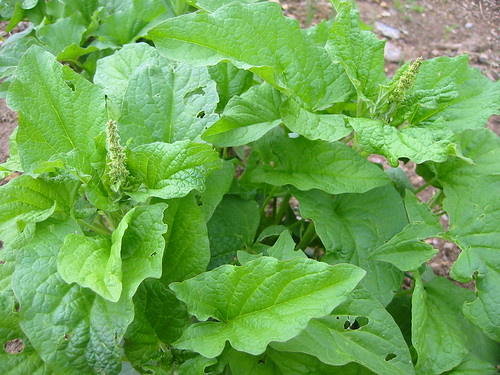
I got Good King Henry from them. Also known as Lincolnshire Spinach. It promises to be a very versitile plant.

The young leaves and flowering stems can be either eaten in salads or cooked like spinach.
The seed can be ground and mixed with flour then used in making bread.
Known as 'poor man's asparagus', the growing shoots can be tie together in bundles, cooked and eaten like asparagus. Young flower buds can be sautéed in butter

I also got a Sorrel from them - “De Belleville” French or Garden Sorrel
 Its meant to be very easy to grow, producing clumps of pale green leaves with a good lemon flavour.
I am told that once you've got a clump going it needs no attention other than when you want to eat it
Sorrel is a ‘herb-vegetable’ or ‘pot-herb’ as it can be cooked like a vegetable.
It can be harvested at baby leaf stage and is great in salads and sandwiches as it doesn't go limp but is most delicious when cooked

From Mr Middletons in Dublin I ordered two other perennials.

Jeruselem Artichoke tubers, they seem a lot less hassle than the globe version.
They also had Aparagus crowns in stock. I got Connovars Colossal as it had 6 crowns - easier to grow than from seed.
So, the plan is that this bed will be very low maintainence, and with any luck - permanently productive.


Free Stats Hit Counter Web 
Analytics